Hot water systems do not fail in a single moment. They deteriorate in layers. Output becomes inconsistent, recovery slows, and efficiency drops long before the system stops working entirely. Most homeowners adjust to these changes without recognising what they indicate. By the time the system fully fails, the internal condition has already reached a point where repair becomes limited or inefficient.
A water heater operates under constant load. Heat cycles, pressure fluctuations, and mineral exposure affect the system every day. These forces do not act independently. They interact over time, gradually altering how the system behaves. What starts as a minor inefficiency becomes a pattern. That pattern develops into system instability. Once instability sets in, the unit no longer performs predictably. Understanding how the system works at that level is what allows you to act before failure becomes unavoidable.
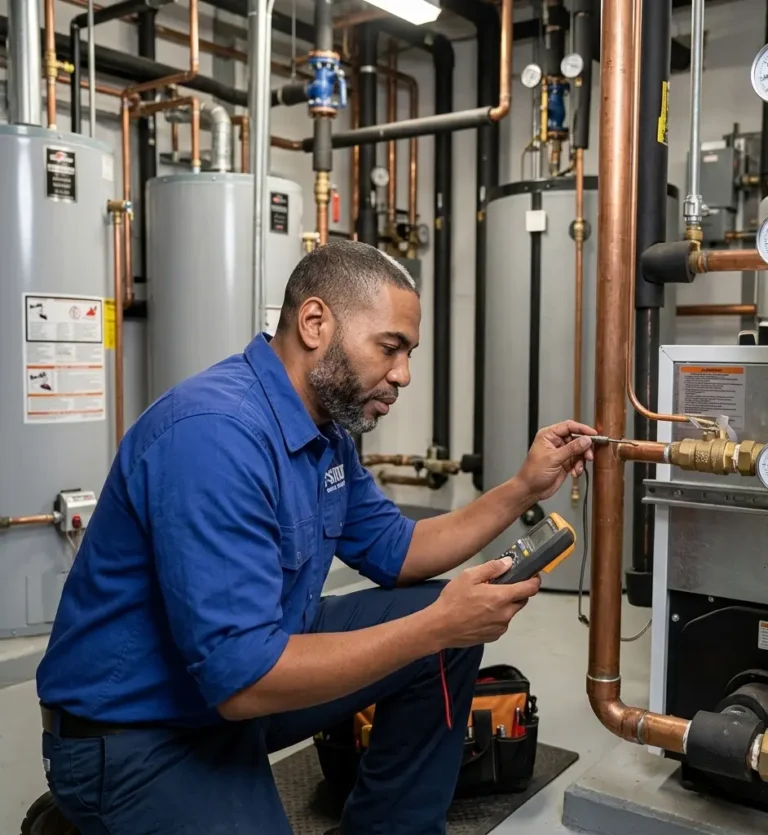
A water heater maintains controlled thermal output while balancing pressure across the plumbing network. It is responsible for delivering heated water at a consistent temperature while ensuring that flow remains stable under varying demand. That function depends on internal equilibrium. Temperature, pressure, and flow must align for the system to operate efficiently.
Inside the system, water is continuously cycling through heating and distribution phases. In a tank-based system, heated water is stored and maintained at a target temperature. Once hot water is used, cold water enters the tank and disrupts that equilibrium. The heating source must then restore the temperature while maintaining pressure stability. This cycle repeats throughout the day, often under varying demand conditions.
When internal balance begins to shift, performance degradation follows. Heat transfer becomes less efficient, pressure distribution becomes uneven, and flow resistance increases. These changes are not visible from the outside, but they affect every output point in the system. Temperature inconsistency, reduced flow, and delayed heating are all consequences of internal imbalance. The system continues to operate, but it does so under increasing strain.
Under actual usage, a water heater is constantly reacting to demand rather than operating in a static state. In a storage tank system, the unit must manage both supply and recovery simultaneously. Each time hot water leaves the tank, cold water enters, reducing the overall temperature. The heating element or burner must restore that temperature quickly enough to maintain consistent output.
This recovery process becomes more demanding as usage increases. In households with multiple fixtures operating at once, the system must compensate for rapid temperature loss. If recovery cannot keep pace with demand, output drops. This is experienced as reduced hot water availability or sudden temperature fluctuations during use.
Tankless systems operate under a different constraint. They eliminate storage but require immediate response to demand. Water is heated as it passes through the unit, which means heating capacity must match flow rate at all times. Any variation in pressure or simultaneous demand affects output directly. There is no buffer. Performance depends entirely on the system’s ability to maintain consistent input conditions.
In both system types, internal resistance develops over time. Sediment accumulation, component wear, and pressure variation alter how efficiently heat is transferred and distributed. The system compensates until those inefficiencies exceed its ability to maintain stable output.
Water heater selection is determined by performance requirements rather than general preference. Each system type operates differently under load and responds differently to demand patterns.
Storage tank systems prioritise stability. They maintain a reserve of heated water and deliver consistent output within that capacity. Once demand exceeds the stored volume, recovery time becomes the limiting factor. This makes them suitable for predictable usage patterns but less effective under high simultaneous demand.
Tankless systems prioritise continuity. They provide hot water without storage limitations but depend entirely on heating capacity and system pressure. Performance remains stable only when demand stays within system limits. When demand exceeds capacity, output drops immediately.
Gas systems deliver higher heat output, allowing faster recovery and improved performance under heavy demand. Electric systems provide consistent operation but may require more time to reach target temperature, particularly under continuous use. Hybrid systems combine efficiency-focused operation with moderate output but require stable conditions to perform effectively.
The key factor is alignment between system capability and household demand. Mismatch between the two results in consistent underperformance regardless of system type.
System degradation presents through changes in performance rather than immediate failure. These changes reflect internal conditions that are no longer stable.
Temperature fluctuation indicates uneven heat distribution or reduced heating efficiency. Shortened hot water duration reflects decreased storage effectiveness or slower recovery. Internal noise, often caused by sediment interaction with heating elements, signals reduced heat transfer efficiency.
Discoloration of water suggests corrosion within the tank or connecting pipes. Leaks indicate structural stress or material failure at connection points or within the tank itself.
Key indicators include:
Each of these conditions represents a shift in internal system behavior. When multiple indicators appear together, the system is operating outside stable parameters.

Determining whether to repair or replace requires evaluation of overall system condition rather than individual faults. A system with isolated failure and stable performance can be effectively repaired. A system showing multiple degradation points cannot be stabilised through repeated repair.
Use the following framework for evaluation:
Repair is appropriate when:
Replacement becomes necessary when:
Repair addresses a specific fault. Replacement eliminates accumulated system instability. The decision depends on whether the system retains structural and operational integrity.
Why does my water heater still “work” but feel worse over time?
Because performance drops before failure. The system is still running, but internal buildup and wear reduce how efficiently it heats and delivers water.
Is it normal for hot water to feel inconsistent during longer use?
No. That usually means the system is struggling to recover fast enough, often due to sediment buildup or reduced heating efficiency.
Why do some plumbers recommend replacement faster than others?
Because they’re looking at system condition, not just the current issue. If multiple components are already degrading, repair only delays the next problem.
Can a water heater fail even if there’s no visible leak?
Yes. Many failures start internally. You’ll notice changes in temperature, pressure, or output long before any leak appears.
Does flushing the tank actually make a difference, or is it optional?
It makes a real difference. Removing sediment improves heat transfer and reduces stress on the system, which directly affects lifespan.
Why does my water heater make noise only when heating?
That noise is usually sediment reacting to heat. It’s a sign the system is working harder than it should to maintain temperature.
How do I know if my system is just “aging” or actually failing?
Aging systems lose efficiency slowly. Failing systems show multiple signs at once—temperature issues, reduced output, noise, or leaks.
Is upgrading to a tankless system always the better move?
Not always. It depends on your household demand and setup. A poorly matched tankless system can perform worse than a properly sized tank unit.
Atascocita | Baytown| North Houston| Crosby| Kingwood | Porter | Spring | New Caney
Plumber in Humble, TX offering a wide range of services including leak detection, water heater installation, and emergency repairs.
