Sewer line problems rarely start as emergencies. They build quietly beneath the surface until the system can no longer handle the pressure. At first, it’s slow drainage or a smell that doesn’t go away. Then water starts backing up where it shouldn’t. That’s the tipping point. Once a sewer line is blocked or damaged, the entire system becomes unstable.
What makes sewer issues different from other plumbing problems is that they don’t stay contained. When a sewer line fails, it affects multiple fixtures, not just one. The problem spreads through the system, and the longer it’s left unresolved, the more difficult and expensive it becomes to fix.
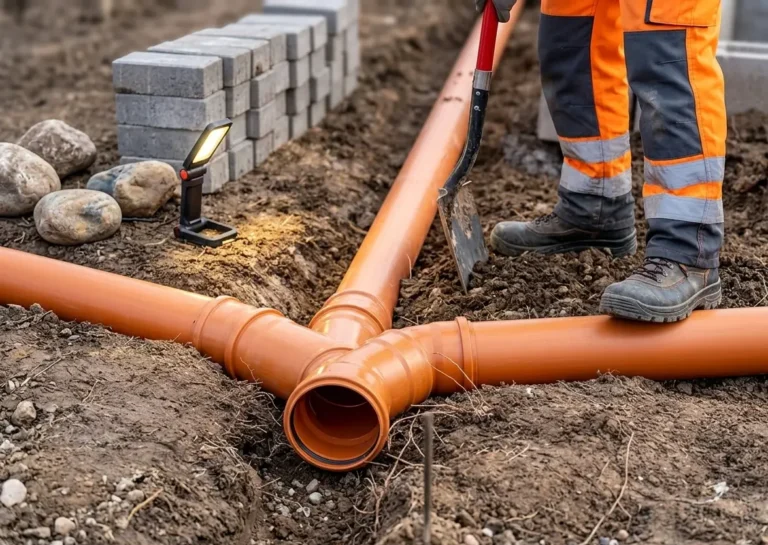
Sewer lines are constantly under load. Every time water leaves your home, it carries waste, debris, grease, and particles through the system. Over time, that flow creates stress. Blockages don’t usually happen all at once. They form gradually. Grease builds up along pipe walls, debris catches at joints, and roots find their way into small openings. At the same time, older pipes begin to weaken from corrosion or ground movement.
What you end up with is a combination of restriction and structural wear. One slows the flow. The other compromises the pipe. From what we see in real cases, most sewer failures are not caused by a single event. They’re the result of buildup and stress that goes unnoticed until the system reaches its limit.
Sewer issues often show up through patterns rather than single events. One slow drain may not mean much. Multiple fixtures acting up at the same time usually does.
A common sign is water backing up in places it shouldn’t. For example, running a sink may cause water to rise in a nearby drain. This happens because the main line is restricted, and water is looking for another path.
Other signals tend to develop alongside it:
These signs point to a system-level problem, not an isolated blockage. Treating them as minor issues usually leads to repeat problems.
Sewer repair starts with inspection, not assumption. A camera inspection is used to locate the exact problem and determine whether it’s a blockage, structural damage, or both. Once identified, the repair approach depends on the condition of the pipe.
If the issue is a blockage, high-pressure cleaning is used to clear debris, grease, and roots. This restores flow without altering the pipe structure. If the pipe is damaged, the repair becomes more involved. Cracks, breaks, or collapsed sections require either reinforcement or replacement. In some cases, internal repair methods can restore the pipe without excavation. In others, the damaged section must be exposed and replaced.
The key is accuracy. Repairing the wrong section or misidentifying the problem leads to recurring issues.

Most sewer problems follow predictable patterns, which means they can be managed before they reach a critical point.
The system performs best when flow is consistent and unrestricted. Anything that disrupts that flow increases the likelihood of buildup and pressure.
A few practical considerations make a significant difference:
Prevention is not about constant maintenance. It’s about not allowing small issues to develop into system-level failures.
Sewer problems fall into two categories. Flow restriction or structural failure. If the pipe is intact and blocked, cleaning restores function. This applies to grease buildup, debris, and early root intrusion. The pipe still holds pressure and alignment. Clearing the obstruction is enough.
If the pipe is cracked, offset, or weakened, cleaning will not hold. Flow may return, but the failure point remains. Pressure builds again. The same section fails under normal use. This is where most repeat problems come from. The blockage is removed, but the damaged section is left in place.
Accurate diagnosis determines the repair method. Camera inspection shows pipe condition, not just blockage. Flow testing confirms whether restriction or structural damage is the primary issue.
At DG Plumbing Services, repair decisions are based on pipe condition:
No guessing. No temporary fixes presented as permanent solutions.
This avoids repeat calls, repeated costs, and system failure under normal load.
If you’re seeing recurring blockages, multiple drains affected, or backups returning after cleaning, the issue is likely structural.
Call (832) 274-3257. Get the line inspected and fix the actual problem, not just the symptom.
Why do sewer problems seem to affect multiple drains at once?
Because they usually start in the main line, not individual pipes. When the main line is restricted, every connected fixture feels it at the same time.
Can a sewer line look fine on the outside but still be damaged inside?
Yes. Most sewer damage happens internally first. Corrosion, buildup, and small cracks develop inside the pipe long before anything is visible externally.
Why does my drain work sometimes and then suddenly back up?
That usually means the blockage isn’t complete yet. Water can pass through slowly, but once flow increases, it overwhelms the restriction and backs up.
Is using drain cleaners a good solution for sewer line problems?
Not for main line issues. They may clear minor buildup in small pipes, but they won’t resolve deeper blockages or structural damage in the sewer line.
How do professionals know if the pipe is broken or just clogged?
A camera inspection shows the exact condition inside the pipe. It reveals cracks, offsets, root intrusion, and buildup in real time.
Can a sewer line repair fix bad smells in the house?
If the smell is coming from trapped waste or a leak in the sewer line, yes. Once the flow is restored and the pipe is sealed, odours usually stop.
Why do sewer problems often come back after being “fixed”?
Because the underlying issue wasn’t addressed. Clearing a blockage without fixing damaged sections leads to the same problem repeating.
What’s the difference between a slow drain and a sewer line issue?
A single slow drain is usually local. Multiple slow drains or backups across the house point to a main sewer line problem.
Atascocita | Baytown| North Houston| Crosby| Kingwood | Porter | Spring | New Caney
Plumber in Humble, TX offering a wide range of services including leak detection, water heater installation, and emergency repairs.
