Most underground pipe problems don’t announce themselves. There’s no visible crack, no obvious leak. What you get instead are small signs that are easy to ignore. Slow drainage. Occasional smells. A patch of ground that never quite dries.
That’s usually where it starts. By the time the issue becomes obvious, the damage has often been there for months, sometimes years. What could have been a straightforward repair turns into something more invasive. This is where understanding your options early makes a real difference, especially when pipe lining is on the table.
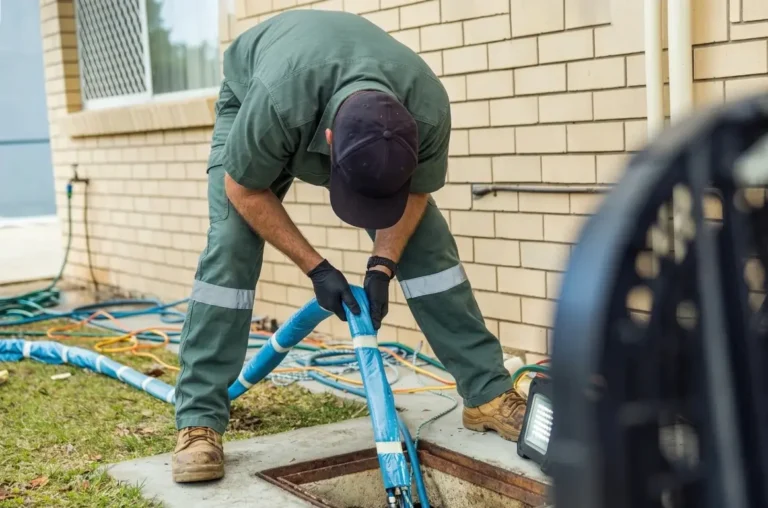
Underground pipes fail quietly. Unlike exposed plumbing, there is no visual feedback. You don’t see corrosion forming or joints weakening. Everything happens below the surface, out of sight.
Most homeowners only notice when symptoms reach a certain threshold:
What’s happening underneath is usually a combination of factors. Tree roots push into small cracks and expand them. Older pipes begin to corrode from the inside. Soil shifts slightly over time, putting pressure on joints and connections. From what we see in real repair work, the issue is rarely a single failure. It’s a buildup of small stresses that eventually compromise the pipe.
Pipe lining is often simplified as a “pipe within a pipe,” but in practice, it is a controlled structural repair process that rebuilds the internal surface of a damaged pipeline without excavation.
The process begins with a camera inspection, which is not just a visual check. It is used to map defects such as cracks, root intrusion, joint separation, and internal corrosion. This step defines whether the pipe can still support a liner or if structural failure has already gone too far.
Once confirmed, the pipe is cleaned using high-pressure water jetting or mechanical tools to remove debris, roots, and scale buildup. This preparation step is critical. Any residue left behind reduces adhesion and compromises the final result.
After cleaning, a flexible liner saturated with thermosetting resin is inserted into the pipe. This liner is typically made from polyester, epoxy, or vinyl ester materials. It is then expanded using air or water pressure so it conforms tightly to the inner wall of the existing pipe.
Curing is the final step. Heat or UV light activates a chemical reaction that hardens the resin, transforming the liner into a rigid, load-bearing structure. What remains is a continuous, joint-free pipe that seals cracks, blocks root entry, and restores hydraulic performance.
From an engineering standpoint, the new liner behaves as a composite structure. It does not rely on the original pipe for watertight integrity but still uses it as a host for alignment and support.
| Parameter | Symbol Unit | (Pre-Lining) | Post-Lining Performance | Technical Impact |
|---|---|---|---|---|
| Internal Roughness Coefficient | ϵ (mm) | 0.5 to 3.0 mm | 0.01 to 0.05 mm | Reduces friction losses, improves flow efficiency |
| Flow Capacity (Hazen-Williams) | C value | 80 to 110 | 140 to 160 | Increases flow rate by up to 30% |
| Wall Thickness (Liner) | T (mm) | N/A | 3 to 10 mm | Restores structural strength |
| Modulus of Elasticity | E (MPa) | Degraded, inconsistent | 1500 to 4000 MPa | Improves load-bearing capability |
| Leak Rate | (L/min) | Variable, often measurable | ~0 | Eliminates infiltration and exfiltration |
| Service Life Expectancy | Years | 5 to 15 (damaged pipes) | 30 to 50+ | Extends usable lifespan significantly |
| Installation Time | Hours | Excavation: 24 to 72+ | Lining: 6 to 12 | Faster project completion |
This is the part most homeowners focus on first, and understandably so. Everyone wants a clear number. The problem is pipe lining doesn’t work on flat pricing. It’s not like replacing a fixture where the cost is predictable.
Pipe lining is condition-based. The price reflects what’s happening inside your pipes, not just how much material is used.
Several variables come into play, and they don’t exist in isolation. They affect each other.
For example, a short section of pipe with minor cracking and easy access is usually straightforward. The preparation is minimal, the liner installation is controlled, and the overall time is shorter.
Compare that to a longer pipe run with root intrusion, scale buildup, and limited access points. Now the process involves more cleaning, more setup, and more precision. That’s where cost increases, not because the method is expensive by default, but because the situation demands more work.
Another factor that often gets overlooked is diagnostic accuracy. Before any lining happens, the pipe has to be inspected properly. Camera inspections, flow checks, and condition assessment all add to the upfront cost, but they prevent misdiagnosis. Skipping this step is where cheap quotes usually fall apart later.
There is also the question of method and materials. Different lining systems use different resins and curing techniques. Epoxy-based liners, UV-cured systems, and inversion methods all have different performance characteristics and cost implications. Higher-quality materials tend to cost more upfront but last significantly longer.
Where pipe lining often gets misunderstood is in comparison to traditional repairs.
On paper, excavation-based repair can look cheaper. You remove the damaged section, replace it, and the job is done. But that number rarely includes what happens outside the pipe.
Excavation brings additional costs that are not always obvious at first:
When those are factored in, the gap between traditional repair and pipe lining narrows, and in many cases, lining becomes the more efficient option overall.
From a long-term perspective, pipe lining also reduces the likelihood of repeat repairs. A continuous, joint-free lining removes common failure points such as joints and small entry cracks where roots or leaks usually start.
The key takeaway is this. Pipe lining is not priced like a product. It is priced like a solution. The cost reflects the condition of your system, the complexity of the repair, and how much work is required to restore it properly.
Pipe lining only works if the existing pipe still has enough structure to support it. That doesn’t mean the pipe has to be in perfect condition, but it does need to hold its shape. The liner relies on the original pipe as a guide, so if that structure is too far gone, the result won’t be reliable.
In practice, pipe lining is most effective when the damage is internal rather than structural. That includes situations where the pipe is still intact but compromised.
It works well for:
In these cases, the liner seals the defects and creates a continuous inner surface. It doesn’t just patch individual points. It reinforces the entire section, which is why it tends to last longer than spot repairs.
Where pipe lining becomes unsuitable is when the pipe can no longer support itself. If sections have collapsed, shifted significantly, or lost their original alignment, the liner cannot form properly. It will follow the same deformation, which means the underlying problem remains.
There are also cases where diameter loss is too severe or debris cannot be fully cleared. If the pipe cannot be cleaned and prepared properly, the liner will not bond correctly, and the repair will fail early.
This is why inspection is not optional. A camera inspection shows whether the pipe still has usable structure or if it has reached the point where replacement is the only viable option. Trying to force a lining solution onto a pipe that cannot support it usually leads to repeat repairs.
Most people assume pipe repair means digging. That expectation comes from traditional methods, where access to the pipe requires excavation and removal of surrounding material.
Pipe lining changes how that process looks from start to finish.
The first step is always inspection. A camera is used to map the pipe, identify damage, and measure the extent of the problem. This step determines whether lining is possible and how much of the pipe needs to be treated.
Next comes cleaning. This is more than just flushing water through the pipe. High-pressure jetting or mechanical tools are used to remove roots, scale, and debris. The goal is to expose a clean internal surface so the liner can bond properly. If this step is rushed or incomplete, the repair will not hold.
Once the pipe is prepared, the liner is inserted. It is positioned along the damaged section and expanded so it presses tightly against the inner wall. The curing process then hardens the material into a rigid structure. Depending on the method, this may involve hot water, steam, or UV light.
After curing, the pipe is inspected again. This confirms that the liner has formed correctly, that flow is unobstructed, and that all defects have been sealed.
The overall process is controlled and contained within the pipe system. There is still work involved, but it doesn’t extend into the surrounding property in the same way excavation does.
From a homeowner’s perspective, the main difference is the level of disruption. There are no large trenches, no extensive surface damage, and no need for major restoration afterward. The repair focuses on the pipe itself, not everything around it.
Underground pipe issues don’t fix themselves. They either stay the same for a while or get worse.
The difference between a manageable repair and a major project usually comes down to timing and the approach you choose. Pipe lining offers a modern solution that reduces disruption and restores function, but it only works when applied in the right situation.
What matters most is clarity. Knowing what condition your pipes are in and what options actually make sense.
If you’re dealing with recurring drainage issues, suspected leaks, or underground pipe damage, it’s worth getting a proper inspection before the problem escalates.
At DG Plumbing Services, we provide clear assessments and practical repair options based on actual pipe condition, not assumptions.
Call (832) 274-3257 to schedule an inspection and find out whether pipe lining or another repair method is the right solution for your system.
Can pipe lining fix recurring drain problems or just structural damage?
It can do both. Many recurring drain issues are caused by internal roughness, small cracks, or root entry points. Lining smooths the surface and seals those entry points, which often resolves the root cause of repeated blockages.
Will I notice any difference in how my drains perform after pipe lining?
In most cases, yes. Water tends to flow more smoothly because the internal surface is cleaner and more uniform. Even with a slight reduction in diameter, improved flow efficiency often makes a noticeable difference.
Is pipe lining a permanent fix or just a temporary solution?
When done correctly, it’s considered a long-term repair. The liner is designed to last decades, not just a few years. The key factor is whether the pipe was suitable for lining in the first place.
What happens if there are multiple damaged sections in the same pipe?
That’s where pipe lining becomes more effective than patch repairs. Instead of fixing one spot at a time, the liner can reinforce an entire section in one process, reducing the risk of future failures in nearby areas.
Can pipe lining be used on pipes with bends or turns?
Yes, within limits. The liner is flexible during installation and can adapt to curves and bends. However, extreme deformation or sharp misalignment can still prevent proper installation.
Does pipe lining increase the risk of future blockages?
No, it usually does the opposite. The smoother internal surface reduces friction and buildup, which helps prevent debris from catching and forming clogs.
How do professionals know the liner has fully sealed the pipe?
After installation, a second camera inspection is performed. This confirms that the liner has bonded properly, that there are no gaps, and that flow is consistent throughout the repaired section.
Is it possible to combine pipe lining with other repair methods?
Yes, and it often makes sense. For example, a collapsed section may be replaced through excavation, while the remaining pipe is lined to prevent future issues. It’s not always one method or the other.
Atascocita | Baytown| North Houston| Crosby| Kingwood | Porter | Spring | New Caney
Plumber in Humble, TX offering a wide range of services including leak detection, water heater installation, and emergency repairs.
