Water heater replacement is rarely planned at the right time. Most systems are pushed until failure, not replaced when performance starts declining. The problem with that approach is timing. By the time a unit stops working, internal wear has already progressed across multiple components. What could have been a controlled upgrade becomes an urgent replacement, often with limited options.
A water heater does not fail as a single event. Output drops, recovery slows, efficiency declines, and pressure behavior changes. These shifts happen gradually, but they indicate that the system is no longer operating within stable conditions. Replacement decisions should be based on those signals, not on complete failure. Acting at the right point prevents emergency costs and allows proper system selection based on actual household needs.
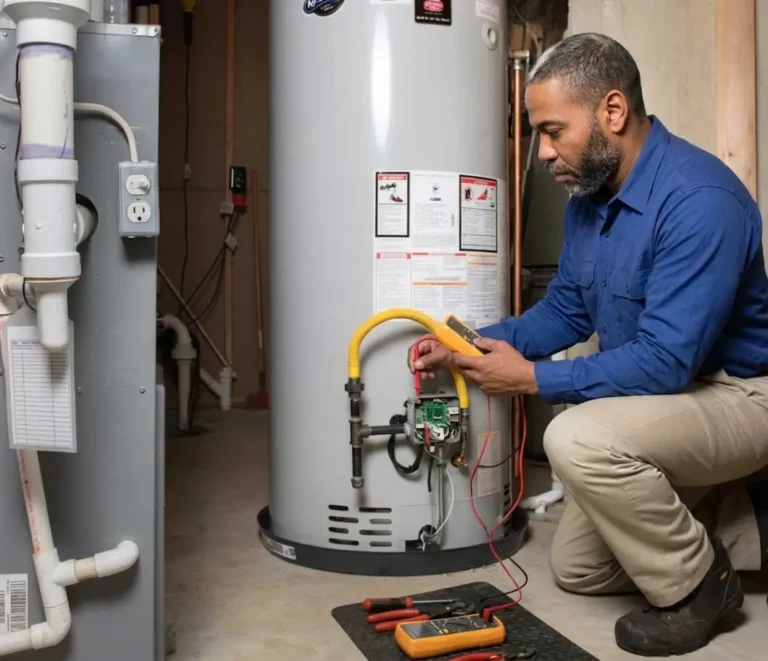
Replacement timing depends on system condition rather than a fixed number of years. Age provides a reference, but performance tells the real story. Most water heaters operate within a stable range for several years before internal degradation begins to affect output. Once efficiency drops, the system compensates by increasing heating cycles. This increases energy consumption while reducing output consistency. Temperature becomes less stable, and recovery time increases after each use. These are not isolated issues. They indicate that the system is operating under internal resistance.
Leakage is often the final stage. Once structural integrity is compromised, replacement becomes unavoidable. Waiting for this stage removes flexibility. Earlier replacement allows for proper planning, system selection, and controlled installation.
Not all problems require replacement, but certain patterns indicate that repair is no longer effective. A system that fails repeatedly is no longer stable. Each repair addresses a different component while underlying conditions remain unchanged.
Common patterns that indicate replacement include:
These patterns show that degradation is no longer isolated. Repair becomes a temporary solution rather than a corrective one. At this stage, replacement provides a more reliable outcome.
Short-term cost often drives decisions, but long-term cost behavior determines actual value. Repairs may appear cost-effective when viewed individually, but repeated repairs increase total expenditure without restoring full system performance.
A simplified cost progression looks like this:
Cost Factor | Repair Path | Replacement Path |
Initial Cost | $150 – $800 per repair | $1,000 – $5,500 one-time |
Frequency | multiple over time | single event |
Performance Stability | declines gradually | restored fully |
Energy Efficiency | reduced over time | improved immediately |
Long-Term Cost | accumulative | stabilised |
Repair costs accumulate because each intervention addresses a different failure point. Replacement resets the system, eliminating compounded wear and restoring efficiency. The difference becomes clear over a multi-year period rather than at the initial expense stage.
System selection should be based on demand, not assumption. Household usage determines how the system should perform under load. Number of occupants, frequency of use, and simultaneous demand all affect system requirements.
Tank systems provide stable output within a fixed capacity. They are suitable for consistent usage patterns and lower installation complexity. Tankless systems provide continuous heating but require correct sizing to handle peak demand.
Energy source availability influences performance. Gas systems deliver higher output for larger households, while electric systems offer simpler installation with lower initial complexity. Space also affects selection. Tank systems require floor space, while tankless systems allow more flexible placement.
Choosing the correct system requires aligning capacity with actual usage patterns rather than selecting based on general advantages.

Installation establishes how the system will operate over time. Pressure settings, connection quality, and compliance with safety standards all affect performance. Incorrect installation introduces imbalance, which accelerates wear and reduces efficiency.
Upgrading to a new system may require adjustments to existing infrastructure. Gas line capacity, electrical supply, and ventilation must support the system’s requirements. Ignoring these factors results in systems that operate below their intended performance level.
Proper installation ensures that the system functions within stable operating conditions. Stability directly affects lifespan and efficiency.
Replacement decisions should include evaluation of the entire plumbing system. Pressure behavior, pipe condition, and usage patterns all influence system performance. Installing a new unit without assessing these factors can lead to repeated issues.
At DG Plumbing Services, replacement planning includes system-level evaluation. We assess how your current system performs under load, identify conditions affecting performance, and determine whether your infrastructure supports the new system. This approach prevents mismatched installations and ensures consistent operation after replacement.
If your water heater is showing signs of decline or you are planning an upgrade, call (832) 274-3257. We evaluate the system as a whole and recommend a solution that fits your actual usage, not just the unit specifications.
How do I know when my water heater needs replacement
Performance decline, recurring issues, and age beyond typical lifespan indicate replacement is more practical.
What is the average cost of water heater replacement
Costs typically range from $1,000 to $5,500 depending on system type and installation requirements.
Is it better to repair or replace an older water heater
Replacement is more effective when multiple components show degradation or repairs become frequent.
How long does a replacement water heater last
Tank systems last 8 to 12 years, while tankless systems can last up to 20 years with proper maintenance.
Does upgrading improve energy efficiency
New systems operate more efficiently, especially when replacing older units with reduced performance.
Can I switch from tank to tankless during replacement
Yes, but it may require upgrades to gas supply, electrical systems, or ventilation.
What affects replacement cost the most
System type, installation complexity, and required infrastructure upgrades have the greatest impact.
Should I replace my water heater before it fails
Yes. Planned replacement allows better system selection and avoids emergency installation conditions.
Atascocita | Baytown| North Houston| Crosby| Kingwood | Porter | Spring | New Caney
Plumber in Humble, TX offering a wide range of services including leak detection, water heater installation, and emergency repairs.
