Most homeowners don’t think about verifying a plumber until something fails. At that point, the focus shifts to fixing the issue quickly, not checking who is doing the work. That’s usually where problems start. A repair can look correct on the surface, but if it wasn’t done to proper standards, the system will expose it over time.
In Houston, plumbing systems don’t operate under easy conditions. Soil movement affects underground lines, pressure fluctuations stress connections, and constant humidity accelerates wear. These factors don’t cause immediate failure, but they amplify weak workmanship. What seems like a minor issue today can turn into a recurring problem simply because the initial repair wasn’t handled correctly.
Verifying whether a plumber is licensed and properly qualified is not just a precaution. It determines whether the repair will hold under normal use or fail when the system is under pressure. At DG Plumbing Services, we often handle jobs where the original work was done without proper verification. The pattern is consistent. The issue was fixed quickly, but the cause was never addressed. That’s why checking credentials before the work begins is one of the simplest ways to avoid repeat repairs and unnecessary cost.
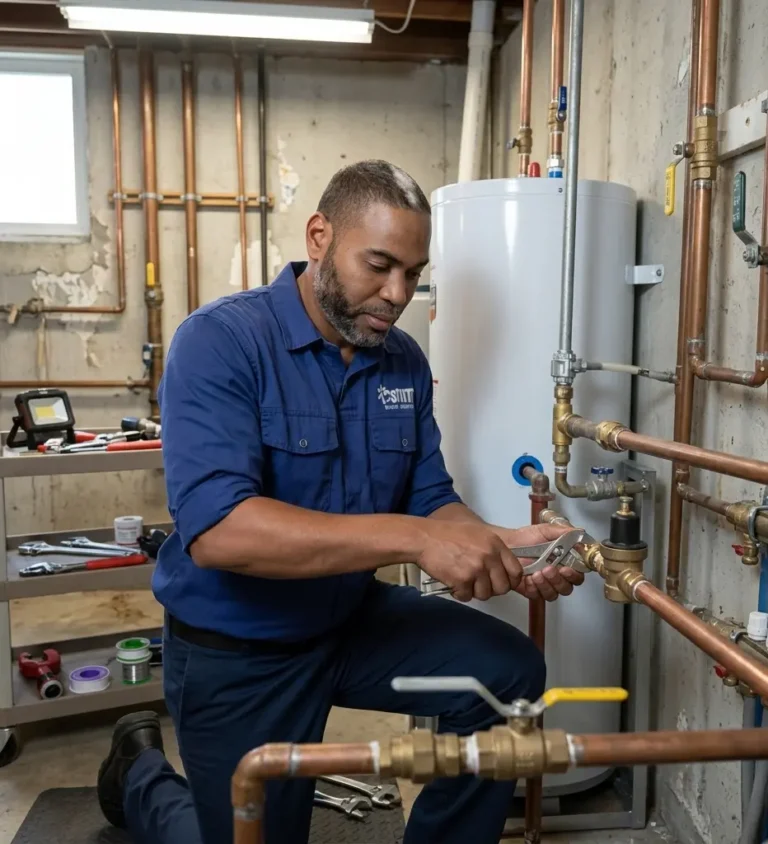
Emergency plumbing costs more because of timing, not just the work itself. When a problem needs immediate attention, the service is prioritised, often outside normal working hours.
A burst pipe or major leak cannot wait. The response needs to be fast to prevent further damage. That urgency affects availability, scheduling, and labour allocation. Scheduled repairs, on the other hand, allow for proper planning. The system can be assessed, materials prepared, and the work carried out without time pressure. There is a trade-off. Emergency service costs more upfront, but delaying a serious issue often leads to higher overall expense due to damage spreading beyond the pipe.
Verification should be based on records, not assumptions. A plumber’s license is public information in Texas, which means you can confirm it before any work begins. This step protects you from unqualified work, unclear liability, and repairs that fail under normal use.
Start with the Texas State Board of Plumbing Examiners database. This is the official source where licenses are registered, updated, and monitored. Searching by name or license number allows you to confirm whether the license is active, valid, and properly assigned. An expired or suspended license is a clear risk, regardless of how confident the plumber sounds.
Once the license is confirmed, the next step is matching it to the actual person performing the work. This is often overlooked. A company may advertise a licensed plumber, but the individual on-site may not hold that license. Verification should always apply to the person handling the job, not just the business name.
To complete the check, focus on these key points:
This process takes only a few minutes, but it eliminates most of the uncertainty. It also prevents situations where work is completed under a licensed name but carried out by someone without the proper qualification.
Not all licenses represent the same level of qualification. Texas plumbing licenses are structured by level, and each level determines what type of work can be performed. A Tradesman Plumber handles basic residential work under supervision. A Journeyman Plumber has more experience and can perform a wider range of repairs. A Master Plumber holds the highest level of licensing and is responsible for system design, advanced repairs, and code compliance.
Understanding this matters because the complexity of the job should match the level of qualification. A simple fixture repair does not require the same expertise as a system-level issue involving pressure imbalance or underground lines. If the scope of work is unclear, asking about license level helps clarify whether the plumber is qualified for the job.
A plumbing license confirms baseline competency. It does not define how a plumber diagnoses, prioritises, or executes a repair under real system conditions. The difference between a repair that holds and one that fails usually comes down to how the system is evaluated before any work begins.
A qualified plumber reads the system, not just the symptom. Pressure distribution is checked to identify stress points. Pipe material is assessed for wear, corrosion, or incompatibility. Connection points are evaluated for alignment and sealing integrity. These factors determine whether the issue is isolated or part of a broader condition affecting performance.
You can identify this level of qualification through explanation. A competent plumber connects the failure to its cause and explains how the system reached that point. That link between cause, condition, and solution is what ensures the repair addresses the underlying issue, not just the visible fault.
Experience strengthens this further. Older systems behave differently from newer installations, especially in Houston where environmental stress accelerates wear. A plumber who understands how systems age under these conditions adjusts the repair method accordingly. This prevents short-term fixes and supports long-term system stability.

Qualification problems rarely appear after the job. They are visible in how the job is approached from the start.
The most consistent indicator is the absence of inspection. Moving directly into repair without evaluating the system suggests the work is based on assumption rather than diagnosis. This increases the risk of missing contributing factors such as pressure imbalance, material fatigue, or improper prior installation.
Communication is another indicator. If the cause cannot be explained clearly and logically, it has not been properly identified. Without a clear cause, the repair lacks direction and becomes reactive instead of corrective.
Additional warning signs include:
These conditions lead to predictable outcomes. The system functions temporarily, then fails under normal use because the original cause remains unresolved.
Plumbing work in Texas is regulated, and most system-level tasks require a licensed professional. This includes repairs involving pressurised lines, installations, and any work that affects the integrity of the plumbing system. Limited minor tasks may be performed under specific conditions, but these do not extend to most residential or commercial plumbing work.
Hiring an unlicensed plumber introduces multiple layers of risk. The work may not comply with state codes, which can affect inspections, resale, or insurance claims. Liability also becomes unclear if damage occurs, as unlicensed work is not held to the same regulatory standard.
The more critical issue is performance. Licensing ensures that the plumber understands how systems behave under pressure, how materials interact, and how installations must be completed to maintain long-term stability. Without that foundation, there is no assurance that the repair will perform correctly beyond initial use.
Verification confirms qualification. Process confirms reliability.
At DG Plumbing Services, the focus is on system-level accuracy. Every job begins with evaluation, not assumption. The issue is diagnosed based on actual conditions, including pressure behaviour, material state, and system interaction. The repair is then applied in a way that supports long-term performance, not just immediate function.
A significant portion of our work involves correcting repairs that were previously handled without proper diagnosis. In those cases, the issue was not the repair itself, but the absence of understanding behind it. Once the cause is identified correctly, the system can be stabilised and repeat failures are eliminated.
If you need a licensed plumber who prioritises correct diagnosis and durable results, call (832) 274-3257 and have the system assessed before the problem escalates.
How do I check if a plumber is licensed in Texas?
You can search the Texas State Board of Plumbing Examiners database using the plumber’s name or license number to confirm status.
What is the difference between a master plumber and a journeyman plumber?
A master plumber holds the highest level of licensing and handles complex system work, while a journeyman performs general repairs and installations.
Do plumbers in Houston need to be insured as well as licensed?
Yes. Insurance protects both the homeowner and the plumber in case of damage or accidents during the job.
Can a handyman legally do plumbing work in Texas?
Only very limited tasks. Most plumbing work requires a licensed professional to comply with regulations.
What happens if I hire an unlicensed plumber?
You risk improper work, failed repairs, and potential issues with insurance or liability.
Is a licensed plumber always more expensive?
Not necessarily. Proper work reduces repeat repairs, which lowers total cost over time.
How can I tell if a plumber is experienced with Houston conditions?
Ask about similar jobs in the area and how they handle issues related to soil movement and corrosion.
Why do plumbing repairs fail even when they look correct?
Because the root cause was not addressed. The system continues operating under the same conditions that caused the failure.
Atascocita | Baytown| North Houston| Crosby| Kingwood | Porter | Spring | New Caney
Plumber in Humble, TX offering a wide range of services including leak detection, water heater installation, and emergency repairs.
