A pipe leak rarely feels urgent at the start. It’s usually small, easy to ignore, and doesn’t interrupt anything right away. Then it spreads. Water moves behind surfaces, into materials, and through spaces you don’t normally see. By the time it becomes obvious, the pipe is no longer the main concern. The damage around it is.
What turns a leak into an emergency is not pressure or size. It’s how long it continues unchecked.
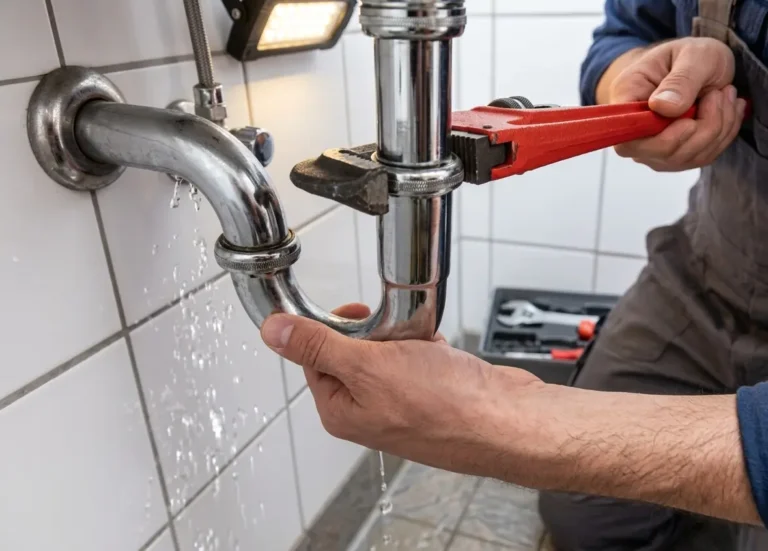
Once water escapes a pipe, it stops behaving like a contained system and starts behaving like a migrating one. It follows the path of least resistance, seeps into porous materials, and spreads laterally before it ever becomes visible.
Most building materials are not designed to handle prolonged moisture. Drywall softens and loses structure. Timber absorbs water and expands, which leads to warping. Insulation traps moisture in enclosed spaces, creating an environment where damage continues even after the leak slows down.
The difficulty is that leaks rarely show where they start. Water can travel along beams, pipes, and surfaces before appearing in a completely different location. This leads to incorrect assumptions about where the problem actually is, which delays proper repair.
In practical terms, even a slow leak can release enough water over several hours to saturate internal materials. The damage builds quietly, then compounds. By the time there is a visible stain or damp patch, the internal exposure has already progressed.
Leaks rarely start with obvious water on the floor. Most of the time, the system gives off small inconsistencies first. These are easy to overlook because nothing feels urgent yet, but they are usually the earliest point where intervention is still simple.
The first changes tend to come from the system itself. Water pressure may feel slightly off, not completely gone, just inconsistent. A tap that used to run evenly might fluctuate, or a fixture may take longer to stabilise. These shifts are often dismissed as minor, but they usually indicate that water is escaping somewhere before it reaches the outlet.
There are also environmental signals that develop quietly in the background. Materials respond to moisture long before visible damage appears. You might notice a faint damp smell in a specific area, or a wall that feels slightly cooler than others. These changes happen because moisture alters temperature and air movement within enclosed spaces.
In practical terms, early warning signs usually fall into three categories:
What makes these signs important is not how dramatic they are, but how consistent they become. A one-time fluctuation may not mean much. Repeated or persistent changes usually point to an underlying issue. In many real cases, the first measurable indicator is increased water usage. A leak does not stop when it is hidden. It continues to release water, and that shows up in consumption data before it shows up physically. By the time visible damage appears, the leak has already affected surrounding materials. Recognising these early signals is what keeps the repair contained. Waiting for visible proof is what turns a manageable issue into a larger one.
The first response determines how far the damage spreads. The instinct to locate or fix the leak immediately is common, but it often delays the most important step. The system needs to be isolated first. Shutting off the main water supply removes pressure and stops the leak from feeding itself. Without that step, any attempt to repair is working against a continuous flow. Once the water is controlled, attention shifts to limiting exposure. Water that has already escaped will continue to spread unless it is contained. The focus should be on preventing further absorption into surrounding materials rather than attempting a full repair in the moment.
Electrical safety also becomes relevant if water has reached internal wiring or outlets. In those cases, isolating power in affected areas is as important as stopping the water. What matters here is sequence. Control the source, contain the spread, then assess the repair. Reversing that order is where most situations get worse.

Water damage does not stop when the leak slows down or becomes less visible. Once materials absorb moisture, the degradation process continues even without active flow.
Porous materials such as drywall, timber, and insulation retain water internally. This trapped moisture weakens structural integrity over time and creates an environment where secondary damage develops. Mold growth can begin within 24 to 48 hours in enclosed spaces, often before any surface signs are visible.
The problem with incomplete repairs is that they address the symptom, not the cause. A pipe may be sealed temporarily, but underlying factors such as pressure imbalance, corrosion, or joint stress remain active. These conditions continue to affect the system and create new failure points.
Common consequences of delayed or partial repair include:
Cost rarely increases all at once. It expands in stages. What begins as a contained plumbing repair can develop into a combination of plumbing, structural, and restoration work if the problem is left unresolved.
The pattern is consistent. Delay increases exposure. Exposure increases damage. Damage increases complexity.
Not every leak requires the same solution. Some can be repaired quickly with minimal intervention. Others require a more structured approach to restore system integrity.
The key difference is diagnosis. Understanding what failed and why it failed determines whether the repair will hold or repeat. Quick fixes can stop water temporarily, but they do not always address the underlying issue.
At DG Plumbing Services, the focus is on identifying the cause before applying the solution. This avoids unnecessary work and reduces the risk of recurrence. The goal is not just to stop the leak, but to stabilise the system so it continues to perform reliably.
A pipe leak becomes a serious problem when it is allowed to continue. The longer water moves through the structure, the more damage it creates beyond the pipe itself. Stopping the leak is only the first step. Identifying the source and repairing it correctly is what prevents the situation from repeating. Early action keeps the repair contained. Delayed action expands the problem into areas that are harder to fix and more expensive to restore.
If you are dealing with an active leak or early signs of water damage, it is worth addressing it before it spreads further.
At DG Plumbing Services, we provide emergency pipe leak repair with a focus on fast response and accurate solutions that hold over time.
Call (832) 274-3257 to get the issue contained and resolved before it develops into a larger problem.
Can a leak exist without visible water damage?
Yes. Water often spreads internally before it becomes visible. By the time surface signs appear, internal materials may already be affected.
Why does water damage continue after the leak is stopped?
Materials that absorb moisture retain it. Without proper drying and repair, degradation can continue even after the source is removed.
Is it possible for a small leak to affect structural components?
Yes. Continuous exposure weakens materials over time. The duration of the leak often matters more than the volume.
How do professionals confirm the exact source of a leak?
They use detection methods that track moisture, sound, or temperature differences to locate the origin rather than relying on visible damage alone.
Can temporary fixes prevent further damage?
They can slow it down, but they rarely address the cause. A proper repair is needed to prevent recurrence.
Why do leaks often return after being repaired once?
Because the underlying issue was not resolved. Pressure, corrosion, or material fatigue continues to affect the system.
Does turning off the water immediately reduce repair costs?
Yes. Isolating the system early limits how far water spreads, which reduces the scope of damage.
What is the biggest risk of delaying a leak repair?
The expansion of damage beyond the pipe. Once surrounding materials are affected, the repair becomes more complex and costly.
Atascocita | Baytown| North Houston| Crosby| Kingwood | Porter | Spring | New Caney
Plumber in Humble, TX offering a wide range of services including leak detection, water heater installation, and emergency repairs.
